AI Automation
Table of Contents
Toggle
Search is changing faster than ever. Traditional search engines are no longer the only way people find information online. Today, users are asking questions through AI assistants like ChatGPT, Google AI Overviews, Gemini, and voice assistants, expecting direct and accurate answers instead of scrolling through multiple web pages.
This shift has introduced a new optimization strategy called Answer Engine Optimization (AEO). While Search Engine Optimization (SEO) remains essential for driving organic traffic, AEO helps your content appear as direct answers in AI-powered search experiences.
So, should businesses focus on SEO, AEO, or both?
The answer is both. Understanding how they work together can help your website stay visible in the evolving search landscape and attract more qualified visitors.
What Is SEO?
Search Engine Optimization (SEO) is the process of improving your website so it ranks higher on search engines like Google and Bing. The goal is simple: increase organic traffic by making your pages more relevant and valuable for users.
SEO involves several key areas:
- Keyword research
- High-quality content creation
- On-page optimization
- Technical SEO
- Link building
- User experience improvements
For example, if someone searches for “best digital marketing agency in Kolkata,” an optimized website has a higher chance of appearing on the first page of search results.
SEO focuses on helping search engines understand your website while delivering valuable information to users.
What Is AEO?
Answer Engine Optimization (AEO) is the process of creating and structuring content so AI-powered search engines and virtual assistants can easily understand and present it as a direct answer. Instead of simply ranking web pages, answer engines provide users with concise responses.
Examples include:
- Google AI Overviews
- ChatGPT
- Microsoft Copilot
- Google Assistant
- Siri
- Alexa
When someone asks,
“What is the difference between SEO and AEO?”
an answer engine may summarize content from trusted websites instead of displaying a list of blue links.
AEO focuses on creating content that answers user questions clearly, accurately, and in a structured format.
AEO vs SEO: Key Differences
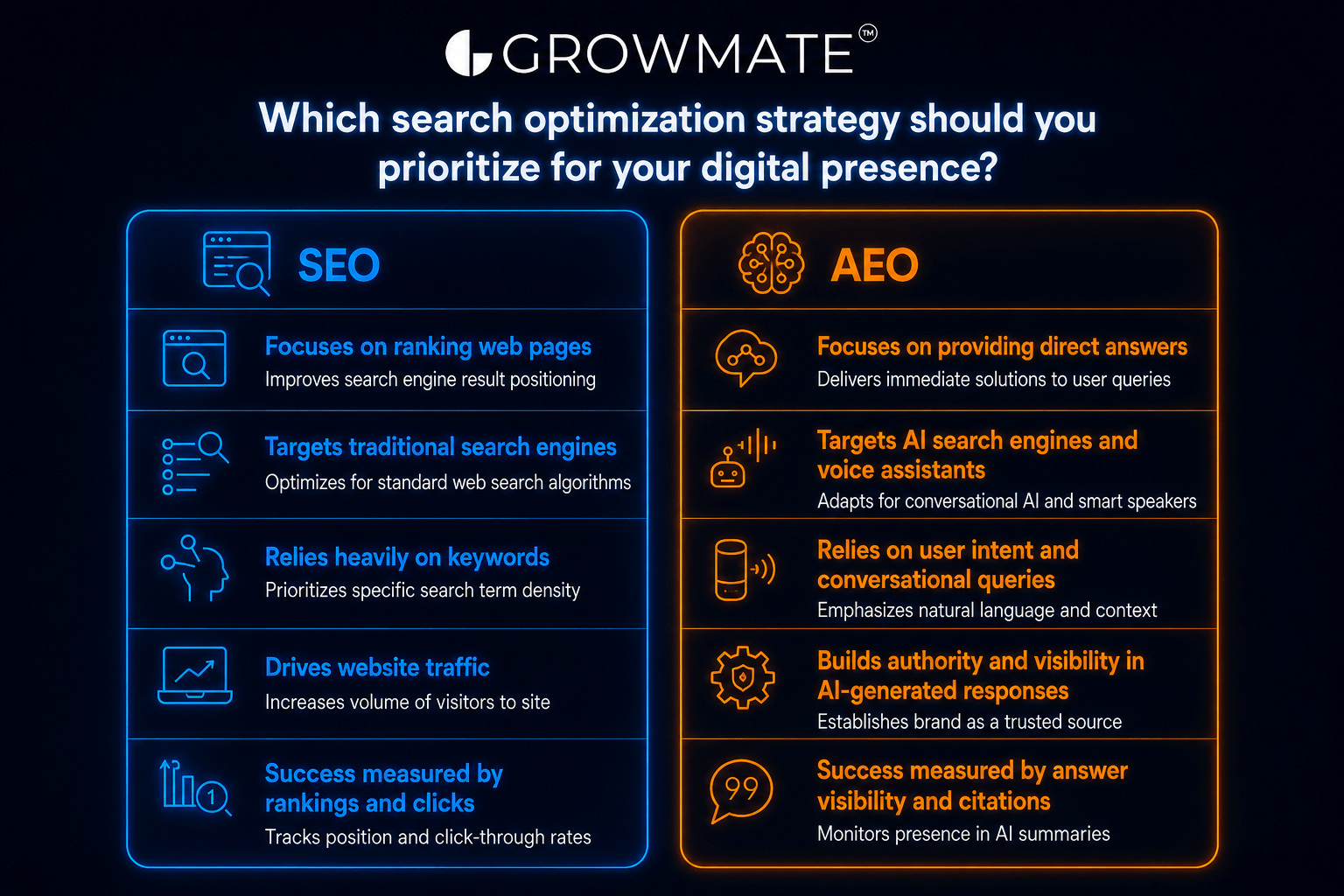
Although their goals differ, they complement each other rather than compete.
Why SEO Still Matters
Despite the rise of AI-powered search, traditional SEO remains the foundation of digital visibility.
Here are a few reasons why:
-
Organic Traffic
Millions of people still use Google search every day to discover products, services, and information.
-
Long-Term Growth
Well-optimized content continues generating traffic for months or even years.
-
Brand Authority
High search rankings improve trust and credibility among potential customers.
-
Better User Experience
Technical SEO improves website speed, navigation, and mobile performance, leading to higher engagement and conversions.
Without strong SEO, even the best content may struggle to reach its audience.
Why AEO Is Becoming Essential
AI-powered search is rapidly changing how users consume information. Businesses that optimize for answer engines gain several advantages.
-
Greater Visibility
Your content can appear directly in AI-generated summaries instead of requiring users to click through multiple websites. -
Voice Search Growth
People increasingly search using natural language such as:
“Which SEO strategy works best for small businesses?”
AEO helps your content answer these conversational queries.
-
Higher Authority
AI systems often reference trusted, well-structured sources. Becoming one of those sources strengthens your brand’s credibility. -
Future-Proof Strategy
As AI adoption continues growing, businesses investing in AEO today will be better positioned for tomorrow’s search ecosystem.
How SEO and AEO Work Together
Many people assume AEO will replace SEO. That isn’t true. In reality, AEO builds upon strong SEO fundamentals.
For example:
- SEO helps search engines discover your content.
- AEO helps AI systems understand and summarize it.
- SEO improves rankings.
- AEO improves answer visibility.
The most successful content strategies combine both approaches.
A well-written article with optimized headings, structured data, FAQs, and authoritative information has a greater chance of ranking on Google while also being referenced by AI search tools.
Best Practices for Optimizing for Both SEO and AEO
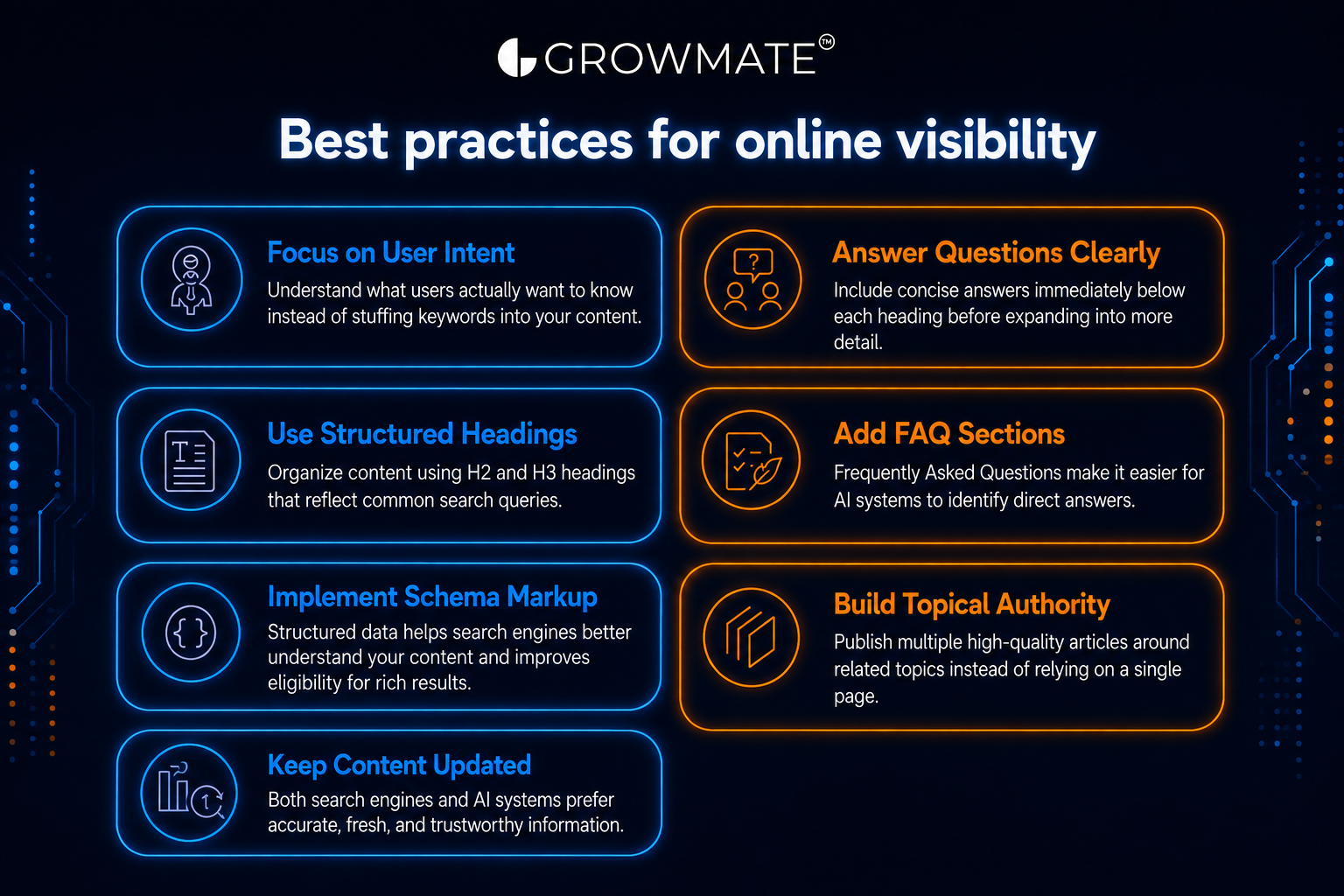
Both search engines and AI systems prefer accurate, fresh, and trustworthy information.
Common Mistakes Businesses Make
Many companies focus solely on traditional SEO while ignoring the growing importance of answer engines.
Some common mistakes include:
- Writing only for keywords instead of users.
- Ignoring conversational search queries.
- Publishing thin or outdated content.
- Not using structured headings.
- Skipping FAQ sections.
- Neglecting technical SEO.
- Failing to demonstrate expertise and credibility.
Avoiding these mistakes helps improve visibility across both traditional and AI-powered search platforms.
Why Businesses Need Both SEO and AEO in 2026
Search behavior continues to evolve as AI becomes more integrated into everyday life.
Customers now expect immediate, accurate answers instead of browsing through dozens of web pages.
Businesses that rely only on traditional SEO risk losing visibility in AI-generated search experiences. Likewise, focusing only on AEO without solid SEO fundamentals limits long-term organic growth.
The winning strategy is a balanced approach that combines:
- Strong technical SEO
- High-quality content
- Clear content structure
- User-focused writing
- AI-friendly formatting
- Ongoing optimization
Together, these strategies improve discoverability, authority, and conversions.
Final Thoughts
SEO is not disappearing, and AEO is not replacing it. Instead, they represent two sides of modern search optimization. SEO helps your website rank in traditional search results, while AEO ensures your content is understood and surfaced by AI-powered answer engines.
Businesses that embrace both strategies today will be better prepared for the future of search, where visibility depends not only on rankings but also on providing accurate, trustworthy, and well-structured answers.
At GrowMate.ai, we help businesses stay ahead of changing search trends through data-driven SEO strategies, AI-ready content optimization, and performance-focused digital marketing solutions. Whether you’re looking to improve your Google rankings or optimize for AI-powered search, our team can help you build a future-ready online presence that drives sustainable growth.
FAQs
1. What is the main difference between SEO and AEO?
SEO (Search Engine Optimization) focuses on improving your website’s rankings in traditional search engine results to drive organic traffic. AEO (Answer Engine Optimization) focuses on structuring content so AI-powered search engines and virtual assistants can provide it as a direct answer to users’ questions. Both strategies work together to improve online visibility.
2. Is AEO replacing SEO?
No. AEO is not replacing SEO—it is expanding how content is discovered. Strong SEO provides the foundation by making your website searchable and authoritative, while AEO increases the chances of your content being featured in AI-generated answers, voice searches, and search summaries.
3. Why is Answer Engine Optimization important in 2026?
As more users rely on AI tools like ChatGPT, Google AI Overviews, Gemini, and voice assistants to find information, businesses need content that answers questions clearly and accurately. AEO helps improve visibility in these AI-driven search experiences, making it an essential part of a modern digital marketing strategy.
4. How can I optimize my website for both SEO and AEO?
To optimize for both, create high-quality content that answers user questions, use clear headings, include FAQ sections, implement schema markup, improve website speed, target search intent, and regularly update your content. Combining technical SEO with AI-friendly content structure delivers the best results.
5. Does AEO help improve voice search rankings?
Yes. AEO supports voice search optimization by focusing on conversational queries and providing concise, direct answers. Since voice assistants often pull information from well-structured content, AEO can increase your chances of being selected as the spoken response.

AboutKushabh Das
Kushabh Das is a Performance Marketing and AI Growth Strategist at Growmate.ai He writes about SEO, AI automation, digital marketing, paid advertising, and business growth, drawing on hands-on experience managing performance campaigns across Meta, Google, and LinkedIn Ads. His articles focus on practical strategies, data-driven insights, and actionable recommendations that help businesses grow online.